
New Construction, New Risks: Why Mobile Buyers Still Need Independent Phase and Final Inspections
New Construction in Mobile Still Needs Independent Eyes
Buyers shopping new construction around Mobile often assume that a freshly built home, inspected by the municipality and backed by a builder warranty, doesn't need much more scrutiny. That assumption can be costly on the Gulf Coast, where soil conditions, moisture loads, and storm exposure stress a house in ways that inland markets never see. A professional home inspection performed independently of the builder, at multiple stages of construction, is one of the few safeguards a buyer has against problems that get sealed behind drywall and sod before the final walkthrough.
Municipal inspectors in Mobile County are doing code compliance checks, not quality control. They are confirming that electrical, plumbing, and structural work meets minimum code, often on a tight schedule with dozens of other builds to cover the same week. They are not evaluating workmanship, checking vapor barrier integrity under a slab, or flagging the kind of installation shortcuts that only show up when someone is looking specifically for them. That gap between code compliance and quality assurance is exactly where independent, buyer-hired inspections earn their keep.
Mobile's Climate Doesn't Care About a Certificate of Occupancy
Mobile sits in one of the most humid climate zones in the continental United States, with Mobile Bay and the surrounding wetlands feeding moisture into the air nearly year-round. New construction doesn't get a pass on this. Lumber that sits exposed on a job site during a wet stretch, HVAC systems sized without accounting for latent humidity loads, or vapor barriers installed incorrectly under slab-on-grade foundations can all set a brand-new house up for mold growth within its first year.
Builders working on tight schedules sometimes close up wall cavities before framing has had adequate time to dry, or before a rain-soaked subfloor has fully off-gassed moisture. In a drier climate this might resolve itself; in coastal Alabama, trapped moisture behind drywall is an open invitation for mold colonies to establish themselves in places no homeowner will see until there's a musty smell or a spike in a utility bill from a struggling HVAC system.
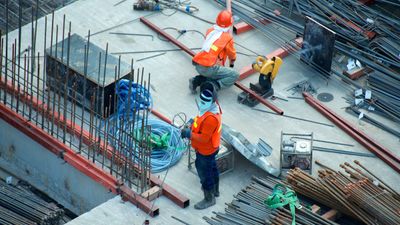
A phase inspection conducted before insulation and drywall go up gives an independent set of eyes a chance to check moisture content in framing members, confirm vapor barrier placement, and verify that HVAC ductwork and equipment are sized and sealed appropriately for Gulf Coast humidity. Once walls are closed, those checks become invasive, expensive, or simply impossible.
Hurricane Season and the Fine Print of New Construction
Fall in Mobile means the tail end of hurricane season, and new construction built during the summer months has often gone up under real storm pressure, sometimes literally. Roof decking, flashing details, and window and door installations all carry outsized importance here, since these are the components most responsible for keeping wind-driven rain out during a tropical system. A roof that looks finished from the street can still have improperly lapped underlayment or missing fastener patterns that won't show a problem until the first serious storm pushes rain sideways into the attic.
Wind mitigation features matter too. Hurricane straps, properly rated garage doors, and correctly installed impact-rated or shuttered openings are all code requirements in much of coastal Alabama, but code requirements and correct field installation are not always the same thing. An inspector checking framing connections during a phase inspection can verify strap placement and fastening before insulation covers the attic and makes this review far more difficult.
Buyers closing on new homes in the fall should also consider how a home performed, or would have performed, during the storm season just passed. Builders are not always forthcoming about whether a lot experienced standing water, a cracked foundation during curing, or temporary bracing issues during a named storm. An independent final inspection, conducted close to closing, gives buyers a current, unbiased read on the home's condition heading into winter and the next hurricane season.
Formosan Termites Don't Wait for the Warranty Walk-Through
Few pest pressures in the country compare to Formosan termite activity along the Gulf Coast. Mobile and the surrounding areas, including Baldwin County across the bay, sit squarely in territory where these termites are established, aggressive, and capable of building large subterranean colonies that can attack a structure faster than native termite species. New construction is not immune simply because the lumber is new; in fact, untreated scrap wood, form boards, and grade stakes left buried near a foundation during construction can become an early food source that draws colonies toward the house before the family has even moved in.
Soil treatment and physical termite barriers are supposed to be installed before the slab is poured or before backfill goes in around a crawlspace foundation, but like any construction step, this can be rushed or inconsistently applied, especially on high-volume developments moving multiple lots at once. Once the slab is poured or the foundation is backfilled, verifying that treatment was done correctly becomes far more difficult, and by the time a buyer notices mud tubes or swarmers, treatment correction is a much bigger job than it would have been at the foundation stage.
A phase inspection timed around foundation work gives a buyer documentation that soil treatment, barriers, or bait station placement happened as specified, rather than relying solely on a builder's paperwork. Given how costly and extensive Formosan termite damage can become in Gulf Coast homes, this is one of the more consequential checks a buyer can insist on during new construction.
What Builder Inspections Miss That Phase Inspections Catch
Builder-arranged inspections, where they happen at all beyond code minimums, are typically performed by inspectors who have an ongoing business relationship with the builder. That doesn't make their findings dishonest, but it does mean their priorities are shaped by schedule and relationship considerations that an independent, buyer-hired inspector simply doesn't share. A phase inspection commissioned by the buyer exists for one purpose: documenting the home's actual condition at that stage, regardless of whose timeline it affects.
Common findings during Mobile-area phase inspections include improperly flashed window openings before siding or brick veneer goes up, HVAC ductwork runs that are undersized or poorly sealed before insulation conceals them, plumbing penetrations through top plates that weaken framing members, and grading plans that don't actually direct water away from the foundation once landscaping is finished. Each of these is straightforward and inexpensive to correct while the relevant area is still open and accessible, and each becomes a significant repair, or a long-term liability, once the home is finished and occupied.
Final inspections, conducted after substantial completion but before closing, serve a different but equally important purpose: confirming that everything observed during earlier phases was actually corrected, and catching anything introduced during the final weeks of finish work, from HVAC commissioning issues to improperly sloped exterior grading installed by a landscaping subcontractor working weeks after the framing crew left.
Older Coastal Housing Shapes What New Buyers Should Expect
Older Coastal Housing Shapes What New Buyers Should Expect
Mobile's housing stock includes a substantial inventory of older homes in neighborhoods like midtown, Oakleigh Garden District, and the Eastern Shore communities across the bay, many built well before modern wind and moisture codes existed. Buyers moving from these older homes into new construction sometimes assume that because new builds meet current code, they have effectively solved the moisture, pest, and storm vulnerabilities that plagued older coastal housing. Current code is a floor, not a ceiling, and it still depends entirely on correct field execution.
New subdivisions are also frequently built on reclaimed wetland or low-lying parcels near drainage easements, terrain that is common throughout Mobile County given the area's proximity to the bay and its tributaries. Site grading and drainage design on these lots deserve the same scrutiny a buyer would apply to an older home with a known flooding history, since a poorly executed grading plan on a new build can create the same standing-water and foundation-moisture problems that affect much older housing nearby.
Why Fall Is a Particularly Useful Season for These Inspections
Why Fall Is a Particularly Useful Season for These Inspections
Fall offers a practical window for new-construction inspections in Mobile. The worst of the summer's extreme heat and afternoon thunderstorm pattern has usually passed, which makes attic and crawlspace access safer and more thorough, and it allows an inspector to evaluate how a newly finished HVAC system is handling the transition from summer's peak humidity load toward cooler, drier conditions. A system that struggles to control humidity even as outdoor conditions ease is a meaningful early warning sign.
Fall closings also mean the home will head into winter with its first real test of exterior envelope performance, since even Mobile's mild winters bring wind-driven rain events. Catching a flashing or sealant deficiency now, before the season's rain exposes it, is considerably less disruptive than discovering a leak after moving in and furnishing the home.
Scheduling Phase and Final Inspections with Noble Property Inspections
Noble Property Inspections serves buyers throughout the Mobile area who want an independent, engineer-owned perspective on new construction, from foundation and framing phases through the final pre-closing walkthrough. Because the firm is engineer-owned, evaluations of structural connections, foundation performance, and drainage design draw on an understanding of how these systems are actually engineered to perform, not just whether they visually appear complete.
Reports are delivered the same day as the inspection, in digital format, giving buyers and their agents time to bring any findings back to the builder while the relevant work is still accessible and correctable, rather than after drywall, siding, or landscaping has closed the window for easy repair. For a market shaped by hurricane exposure, aggressive Formosan termite pressure, and some of the most humid conditions in the country, that timing can make the difference between a new home that performs as promised and one that quietly inherits the same vulnerabilities as Mobile's older coastal housing stock.
Ready to protect your investment? Noble Property Inspections proudly serves Mobile and the surrounding area with thorough, same-day inspections. Learn more and book online.